From page to screen: Roberta Colombo’s directorial vision and Nino Orto’s narrative reportage come to life through the lens of AI.
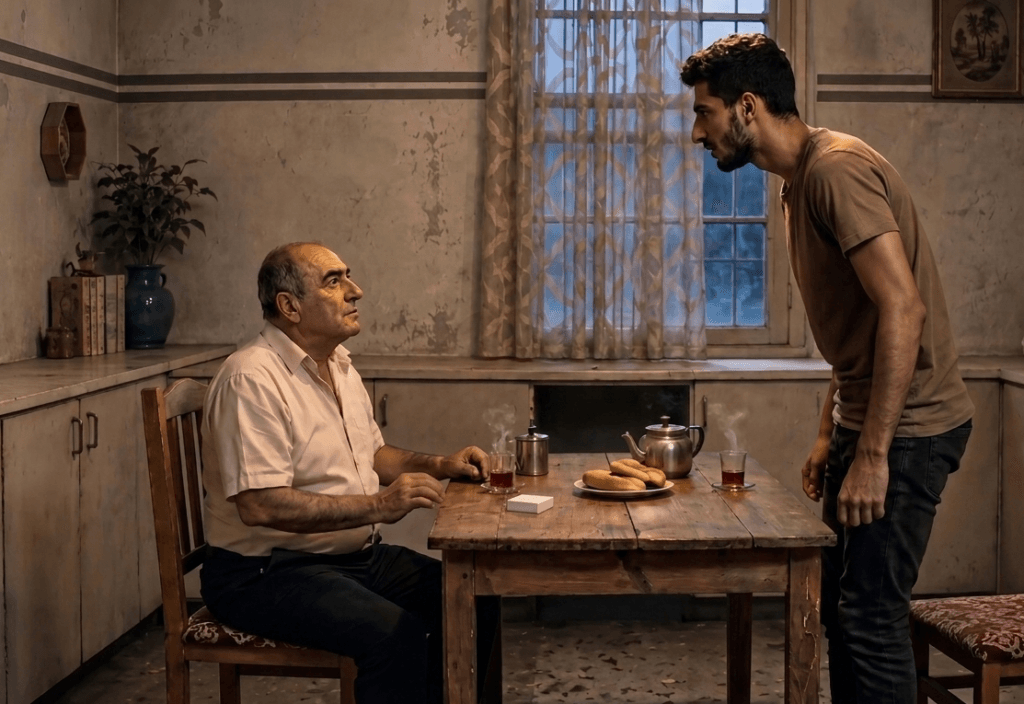
The AI-generated short film “AMAL” has achieved a major international milestone, securing a spot among the finalists at the 2026 Burano Artificial Intelligence Film Festival (BAIFF). Directed by Roberta Colombo and produced by Next Video Trailer, the film delivers a moving reflection on collective memory, identity, and the courage required to break free from the logic of perpetual conflict between Israelis and Palestinians.
For a comprehensive overview of the project -including the official trailer, author biographies, and the core vision guiding the team- we invite you to read our initial feature: “An Inner Journey in Search of Oneself: How ‘AMAL’ Tells the Story of Courageous Disobedience in the Face of Conflict.”
A Humanist Touch in Digital Cinema
What sets “AMAL” apart in the Burano Artificial Intelligence Film Festival 2026 lineup is not merely its reliance on technology, but the deep artistic sensitivity behind the lens. Under Colombo’s visionary direction, the film moves beyond a technical exercise, transforming generative tools into a genuinely poetic, humanist language that lifts human stories into universal archetypes.
Colombo approaches the subject matter with remarkable nuance and emotional subtlety, successfully translating Orto’s prose into evocative visual metaphors. Rather than treating artificial intelligence as a shortcut, she wields it like a painter’s brush -giving shape and substance to the characters’ inner struggles, quiet resilience, and yearning for redemption.
An original screenplay born from the authors’ vision and experience has found a new way of expression through artificial intelligence. It stands as a prime example of how the new frontiers of AI filmmaking are not designed to replace traditional cinema, but to collaborate with human creativity -which remains truly irreplaceable- paving the way for new forms of storytelling. Ultimately, it demonstrates that even within the AI filmmaking process, the human mind must continue to guide every step, particularly in the crucial initial stages of conceptual design and prompting.
From Field Reportage to the Screen
At the heart of Amal is a story adapted directly from the book “Israele-Palestina. Voci di una terra contesa” (Israel-Palestine. Voices from a Contested Land) by war correspondent Nino Orto.
The book occupies a unique narrative space, floating between on-the-ground reportage and literary fiction. While its protagonists are fictionalised, their stories unfold within authentic settings, real locations, and meticulously documented historical contexts. This hybrid structure captures the emotional and human truth of the conflict without ever abandoning journalistic rigor.
Far from simply optioning the rights to his book, Orto took an active role in writing the screenplay, working in close collaboration with Colombo and the production team. Orto’s book blends investigative reporting with narrative empathy to offer an intimate, nuanced perspective on one of the modern world’s most intricate conflicts. His hands-on involvement ensured that the short film preserved the expressive balance and human complexity of the original text.
Authenticity Fueling Innovation
A pivotal factor in the film’s success was Orto’s behind-the-scenes research. Drawing from his personal archive and years of field experience, he provided accurate reference materials and documentation. This enabled the team at Next Video Trailer to recreate the physical and cultural landscapes of the narrative with grounded realism.
By anchoring AI generation to authentic historical and geographical details, Colombo and Orto built a rich, immersive visual world where the protagonist’s journey mirrors the lived reality of those who inhabit these lands.
Ultimately, the convergence of Orto’s field research and screenplay, Colombo’s signature directorial style, and Next Video Trailer’s technical expertise has produced a short film that bridges narrative journalism and new digital cinema. It provides viewers with subtle insights often lost in today’s polarised media coverage of the Israeli-Palestinian conflict.