

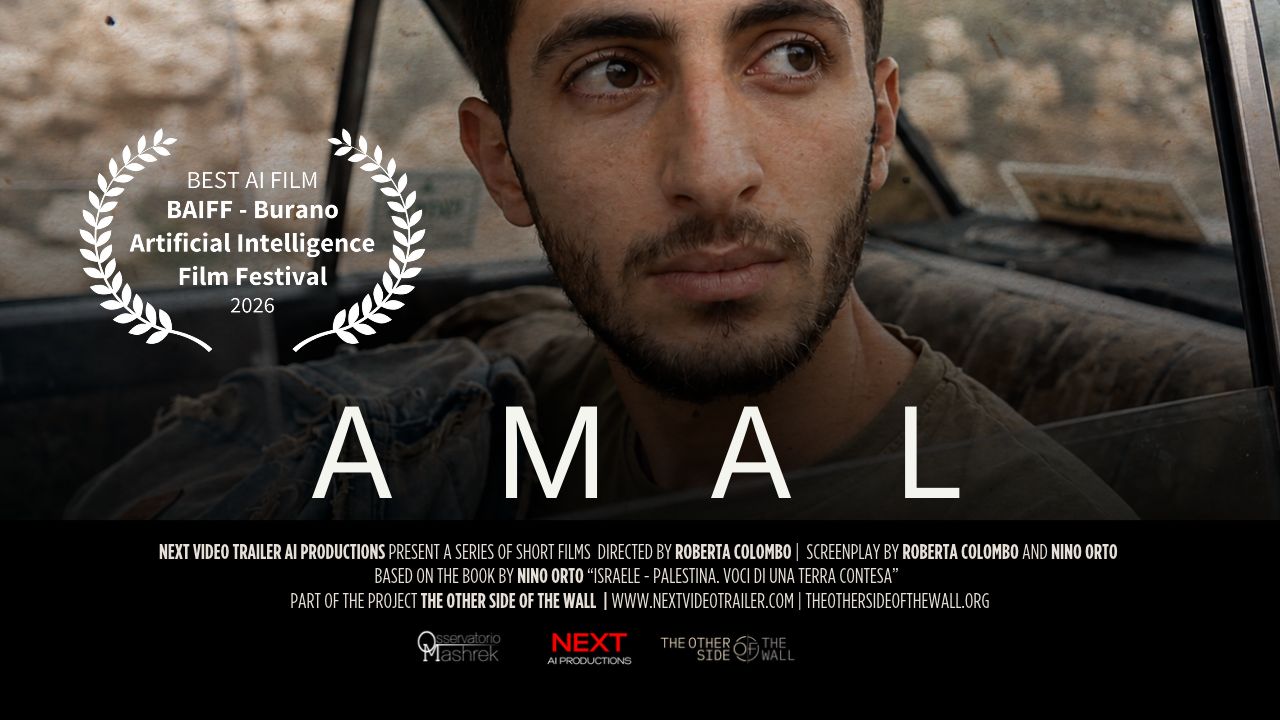
Directed by Roberta Colombo and based on Nino Orto’s book, the award-winning short film uses generative AI to offer a new perspective on the Israeli-Palestinian conflict.
Generative cinema is taking its first steps toward artistic and conceptual maturity, proving that technology does not replace empathy – instead, it can amplify the stories that need to be told most. This was the central message of the fourth edition of the BAIFF (Burano Artificial Intelligence Film Festival) in Venice, which awarded its highest honor, Best AI Film 2026, to Amal.
Directed by Roberta Colombo and created in collaboration with journalist and author Nino Orto (who co-wrote the screenplay), Amal is produced by Next Video Trailer in partnership with Osservatorio Mashrek. The short film is directly inspired by a character from Nino Orto’s book, Israele-Palestina: Voci di una terra contesa (published by Logisma), a work drawing on years of reporting, listening, and on-the-ground analysis.
Beyond the Conflict: The Human Element
In a media landscape often saturated with rhetoric, polarisation, and imagery of destruction, Amal takes a different path: placing the individual, human vulnerability, and the genuine possibility of overcoming hatred at the center. The narrative goes beyond documenting the complexity of the Middle East crisis, seeking a glimmer of hope within the fabric of human relationships -finding in the young protagonist’s final smile a symbol of hope and potential coexistence.
In the words of director Roberta Colombo:
“Winning Best AI Film is an immense satisfaction for me, for Nino Orto -the author of the book on which the film is based and its co-screenwriter- and for our whole team. But the greatest satisfaction lies in the motivation behind the award: the film’s ability to move the audience and convey a powerful message through the language of AI cinema.As a director working with generative AI, I believe the most important recognition is seeing the human craftsmanship behind the clips valued. It is a complex creative process involving research, sensitivity, narrative choices, editing, experimentation, and meticulous care- steps that are surprisingly close to traditional filmmaking.
It was a true team effort combining skills, vision, and sensitivity into a creative synergy. Knowing that all of this reached people’s hearts, just as we had hoped, is perhaps the most rewarding part of all.”
The recognition at BAIFF 2026 -an event held under the auspices of the Italian National Commission for UNESCO and the Ministry of Enterprises and Made in Italy – highlights the power of combining investigative journalism, innovative audiovisual production, and new digital media.
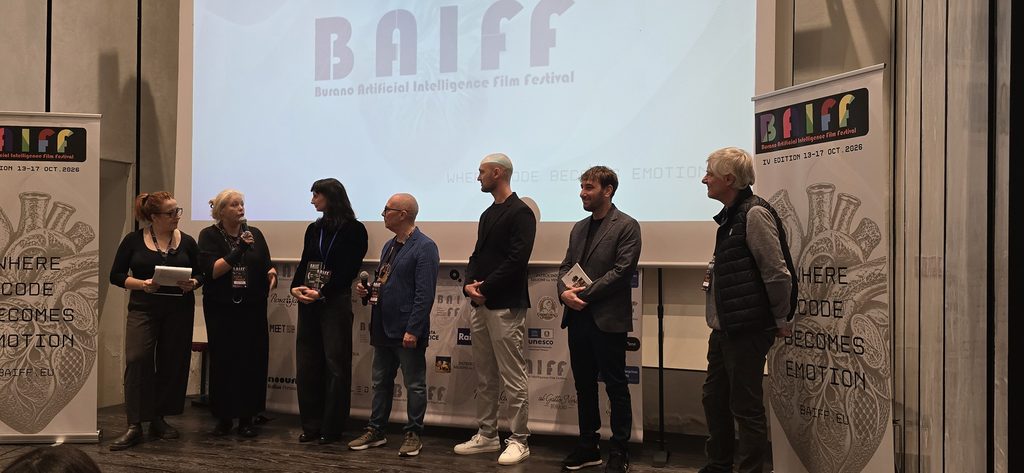
In the words of author and co-screenwriter Nino Orto:
“Amal is the result of 15 years of intense work, gathering testimonies, hopes, and fears from both sides of the wall dividing Israelis and Palestinians. Born from one of the stories in my book, Amal embodies a hope that refuses to give way to bitterness or hatred, rejecting pre-packaged truths shaped by mainstream narratives and ideological agendas.Thanks to director Roberta Colombo’s fantastic adaptation and extraordinary artistic sensitivity – capturing the powerful message and nuances of the character from the very start – Amal cuts straight to the heart of the matter. It introduces a personal dimension so often overlooked or drowned out by the polarizing debates surrounding the Israeli-Palestinian conflict. Our victory at BAIFF demonstrates that now, more than ever, there is a vital need for new perspectives beyond all-encompassing narratives.”
A Key Piece of “The Other Side of the Wall”
Winning in Venice marks a major milestone, but it is part of a much broader cultural endeavor. The short film is an integral element of The Other Side of the Wall (www.theothersideofthewall.org), a comprehensive transmedia project conceived and curated by Nino Orto that encompasses the book, a series of short films, and a traveling multimedia exhibition.
The initiative aims to bring a fresh, in-depth perspective on the Israeli-Palestinian conflict to both national and international audiences. In an era marked by growing and exhausting polarization in public discourse, The Other Side of the Wall strives to transcend rigid, binary narratives, offering a space for reflection grounded in empathy, rigorous analysis, and the shared human experience.