Hezbollah, the ’Ndrangheta and the Cartel of the Suns have quietly built a transnational empire, linking Venezuelan ports, Calabrian mafias and Middle Eastern militias into a single engine of global crime and instability.
According to where you read this you may wonder either why Trump started a new war, or why should I care if I’m sitting in Europe, or Italy. Well, there is a bit of everything for everyone. It is complicated, multilayered and global, so sit tight..
Most people picture Venezuela as just another failed state: empty shelves, refugees fleeing north, Maduro ranting on TV.
If that is the mental image you also have, well you are missing the criminal empire underneath, one that stretches from Lebanese militias to Italian mafias and now straight into American cities.
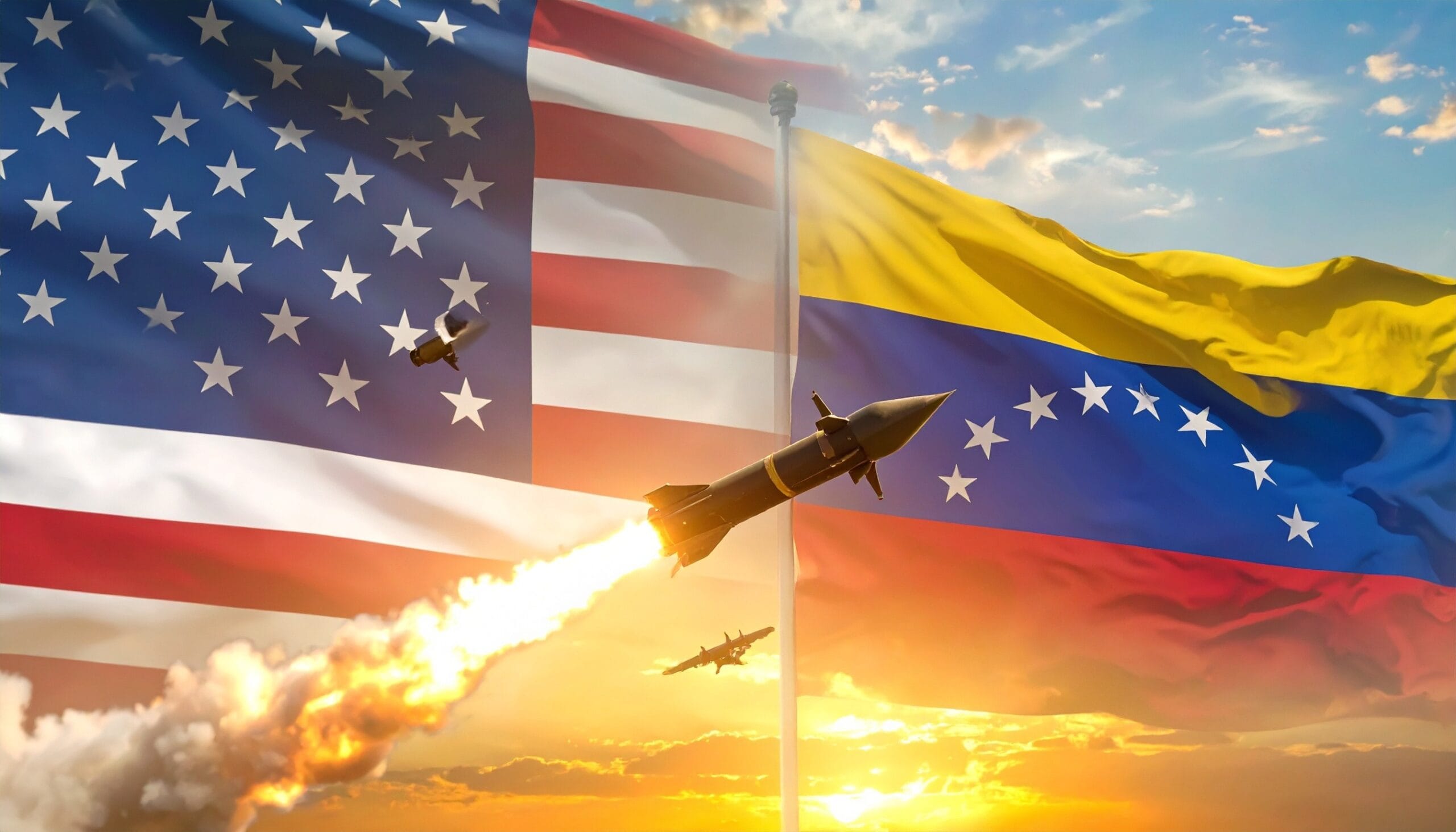
We are in November 2025, the network you will read about has triggered something unprecedented: U.S. warships circling Venezuela, airstrikes sinking drug boats, and Washington openly treating Maduro’s regime as a terrorist organization.
I’m talking about Operation Southern Spear and it isn’t some abstract Pentagon exercise.
Two carrier groups, including the USS Gerald R. Ford, sit off Venezuela’s coast. Marines are doing live drills.
At least five strikes since September have killed dozens, sunk vessels loaded with cocaine, and choked off Caribbean smuggling routes.
And while Trump’s framing it as war on fentanyl and gangs, the real target runs deeper: dismantling Iran’s forward base in America’s backyard.
There would be naturally tons of intelligence material to unfold. I have summarized the most salient one, in a narration that both if you are exploring the subject now or you are a fan of cross border kinetic conflicts, will give you a quick tour about everything relevant to grasp it well.
The Ndrangheta Connection: Where This Story Actually Starts
Let’s start with the most cunning of the puzzle pieces, but also the most obvious, once you’ll read about it.
So, before diving into Venezuelan jungles and Hezbollah operatives, let me write about the Calabrian gateway.
The Ndrangheta, Italy’s most powerful mafia, has controlled European cocaine imports for decades. What makes them unique is their Lebanese ties, specifically to Hezbollah networks that emerged from Italy’s diaspora communities.
Researchers like Emanuele Ottolenghi at the Foundation for Defense of Democracies have documented this: Hezbollah doesn’t just move drugs, it partners with established criminal infrastructure.
Here’s how it works.
Colombian cocaine gets to Venezuela (we’ll get there). Venezuelan ports, controlled by the Cartel of the Suns (military generals running drug ops), ship it across the Atlantic. It lands in West African waypoints like Guinea-Bissau, then moves to Calabrian ports like Gioia Tauro. The Ndrangheta distributes across Europe, launders profits through construction and restaurants, and kicks back percentages through Lebanese middlemen connected to Hezbollah fundraising cells.
Douglas Farah, who’s tracked transnational crime for the National Defense University, calls this the “South-South” pipeline: cocaine, weapons, people moving between Latin America, Africa, and the Middle East, all outside Western surveillance.
When you hear about Hezbollah making hundreds of millions from drugs, a chunk flows through these Calabrian routes.
The Italian Anti-Mafia Directorate has prosecuted cases proving it, guys with dual Lebanese-Venezuelan passports coordinating shipments that funded Hezbollah operations in Syria and Lebanon.
Why does this matter for Venezuela? Because Maduro’s regime didn’t invent narco-terror, it plugged into an existing mafia-militant network that Hezbollah built over 30 years.
The Ndrangheta gave them the blueprint: state corruption, port control, diaspora cover. Venezuela became the Western Hemisphere node of a global system.
How Chávez Opened the Door, Maduro Locked It
Lets now enter the country, first with a bit of history.
Ugo Chávez started this whole monster in the 2000s. Hating America and loving anti-imperialist posturing, he cozied up to Iran. Suddenly, Venezuelan passports were getting issued to Middle Eastern “businessmen” no questions asked. Joseph Humire, who runs the Center for a Secure Free Society and testifies to Congress constantly, documented thousands of these documents going to suspected Hezbollah operatives.
Key players made it happen. Tareck El Aissami, Syrian-Lebanese descent, became interior minister then vice president. U.S. Treasury sanctioned him in 2017 for narco-trafficking and Hezbollah ties. Ghazi Nasr al-Din, a Venezuelan diplomat, got sanctioned earlier for straight-up fundraising for Hezbollah. These weren’t rogue actors, they were regime insiders.
After Chávez died, Maduro doubled down. The Cartel of the Suns (named for the sun insignias generals wear) expanded from protection rackets into full partnership with Colombian cartels, FARC dissidents, and Hezbollah facilitators. Cocaine production in Colombia kept rising, but the smuggling choke point was Venezuela’s coastline and airstrips. Hezbollah operatives, often from Venezuela’s 200,000-strong Lebanese community, didn’t run the drugs directly. They handled logistics, money laundering (trade-based schemes, gold mines, fake invoices), and international connections.
Matthew Levitt’s research in Hezbollah: The Global Footprint shows Venezuela became a safe haven: training camps rumored on Margarita Island, passport fraud letting operatives enter the Americas, zero prosecution risk. Roger Noriega, former Assistant Secretary of State, warned Congress in 2012 about Hezbollah training Venezuelans in asymmetric warfare.
Nobody listened until the body count started piling up in U.S. cities from fentanyl and Tren de Aragua violence.
The triangle works like this: cocaine leaves Colombia, gets laundered through Venezuela (protected by generals), ships via Hezbollah networks to Europe/Africa (the Ndrangheta piece), and profits flow back to fund Iranian proxies. Hundreds of millions annually, outside the formal banking system, invisible to sanctions.
Why 2025? The Post-Gaza Window
Trump didn’t wake up and decide to bomb Venezuela randomly.
On top of the known history you read in the paragraphs before, we are after all in 2025 after a two year brutal regional conflict in the Levant, and two strategic shifts opened up the opportunity to forcefully contrast this regional, international and internal security threat for the US.
Hezbollah got wrecked in 2024-2025. The Israel war killed thousands of fighters, exploding pagers decimated leadership, Iranian money dried up. Ottolenghi and Humire both noted Hezbollah became cash-desperate. Venezuelan cocaine routes went from side hustle to lifeline. Intelligence estimates suggest 30-40% of Cartel of the Suns shipments now involve Hezbollah facilitation. Striking now cuts funding while they’re weak, prevents regeneration.
Iran’s Latin American footprint also became untenable. Quds Force operatives, drone factories in Venezuela, cultural centers spreading influence across the region.
With Maduro isolated after stealing the 2024 election and facing riots, the U.S. saw a rare vulnerability window. Iran can’t project power like before, and Maduro’s military loyalty is cracking under unpaid salaries and sanctions.
On November 16, Secretary of State Marco Rubio designated the Cartel of the Suns a Foreign Terrorist Organization, explicitly tying it to Hezbollah.
Legally, that transforms Maduro (already indicted in the U.S. for narco-terrorism since 2020) into a terror chief. Under the 2001 AUMF, that justifies kinetic action without new Congressional approval.
Critics scream regime change.
SOUTHCOM sources describe it as “degrade, dismantle, destroy”: choke regime cash, fracture military, create collapse conditions without full invasion.
Colin Clarke at the Soufan Center warns “Hezbollah is in Venezuela to stay” unless the regime falls entirely, but the operation’s betting on decisive disruption.
What’s Happening Right Now
Operation Southern Spear launched quietly in August, ramped up brutally since:
Naval Ring: The Ford carrier group (90+ jets) and USS Iwo Jima amphibious group (Marines aboard) form a blockade. Satellite shows submarine patrols, live-fire drills. No Venezuelan vessel moves without U.S. eyes on it.
Strikes: Five confirmed since September. First one, September 2, killed 11 on a “narco-boat” allegedly carrying Tren de Aragua members. Subsequent hits targeted smaller vessels, disrupting routes entirely. No land strikes yet, but intelligence has locked ports, airstrips, and labs as targets.
Maduro’s Response: Activated 200,000 troops and 4.5 million militias in exercises, warning of “endless war.” Iran condemned the U.S., proving they’ve got skin in this game.
Effects: Caribbean cocaine flow dropped hard, per DEA estimates. Regime’s fraying: reports of unpaid military, defections. Opposition figures quietly hope pressure forces negotiations or collapse. Humire warns entrenched networks don’t vanish overnight. But momentum suggests the U.S. is going for decisive disruption, not containment.
Whether it ends in Maduro fleeing, a deal, or wider war remains open.
But the hidden axis from Calabrian ports to Caribbean smuggling lanes to American streets isn’t hidden anymore.
Sources
Joseph M. Humire, “The Maduro-Hezbollah Nexus” (Atlantic Council, 2020)
Emanuele Ottolenghi, Congressional testimonies and FDD analyses
Douglas Farah, National Defense University reports on transnational crime
Matthew Levitt, Hezbollah: The Global Footprint (Georgetown University Press)
Colin P. Clarke, Soufan Center analyses on Venezuela-Hezbollah ties
Roger Noriega, 2012 Congressional testimony on Hezbollah in Latin America
Current Operation Southern Spear reporting from defense and intelligence outlets